
Surviving the Tiwanaku Archaeological Site
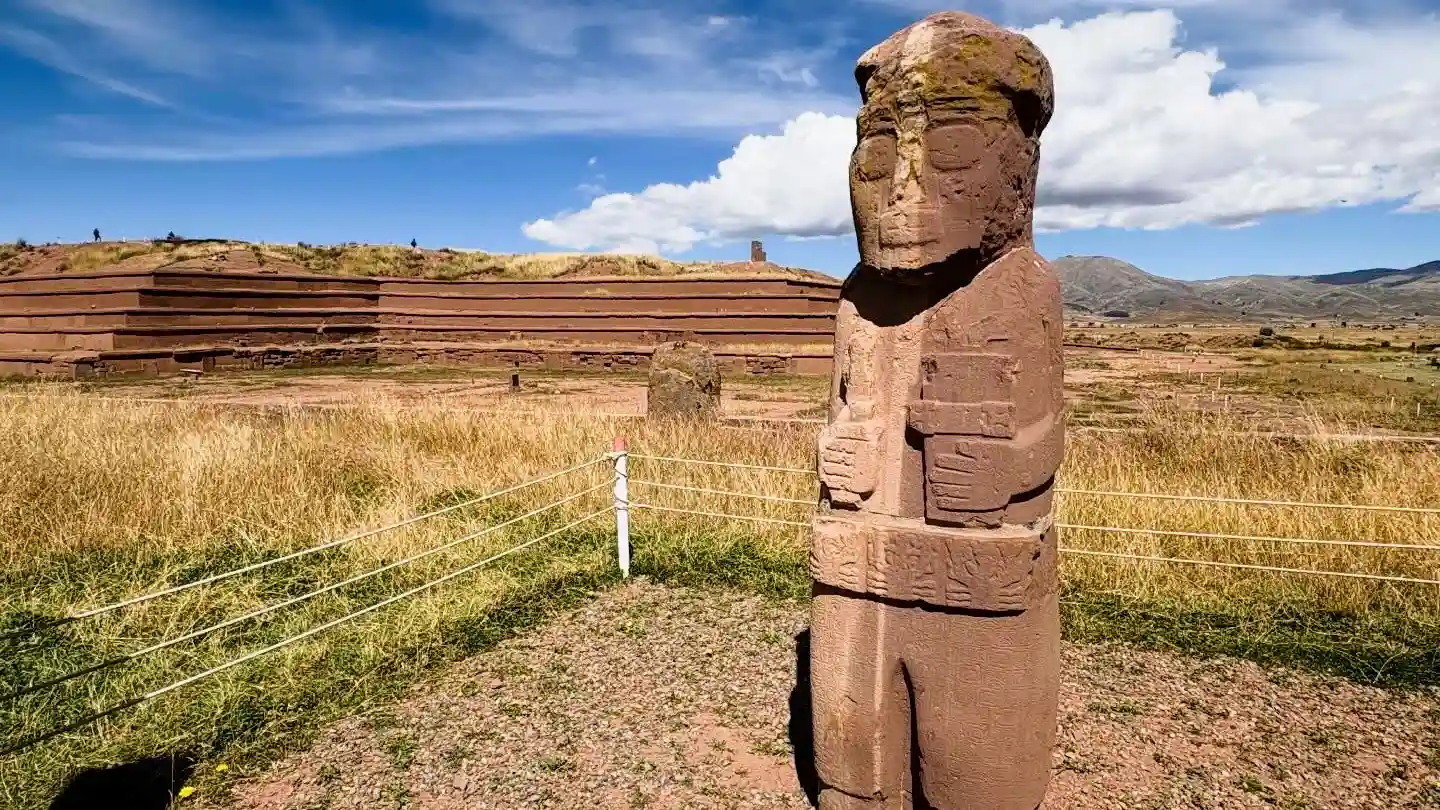
Table of Contents
- Quick Info Box
- The Reality of Arriving at the Tiwanaku Archaeological Site
- Historical Context: The Architects of the Andes
- Reality Check: What Instagram Hides About the Ruins
- Top Things to Do Inside the Complex
- Photography, Lighting, and Drone Realities
- Exact Location & Navigation from La Paz
- Weather, Climate & High-Altitude Warnings
- Essential Visitor Facilities on Site
- Estimated Budget Guide & Transport Costs
- What to Pack for the Altiplano
- Safety & Responsible Tourism
- Nearby Attractions for Your Itinerary
- Where to Eat & Stay Nearby
- Frequently Asked Questions (FAQs)
Quick Info Box
- Exact Location: Ingavi Province, La Paz Department, on the Bolivian altiplano near the southern shores of Lake Titicaca.
- Local Name: Tiwanaku (also spelt Tiahuanaco).
- GPS Coordinates: 16.5550° S, 68.6736° W.
- Altitude: 3,850 metres (12,631 feet) above sea level.
- Best Time to Visit: May to September. The dry winter months guarantee clear skies. June 21st is the Aymara New Year, which is culturally significant but chaotic.
- Entry Fees: 100 BOB (Bolivian Boliviano) for foreigners / 15 BOB for Bolivian nationals.
- Vibe/Highlight: A stark, wind-battered plateau littered with monumental stone carvings that predate the Inca empire by centuries.
The Reality of Arriving at the Tiwanaku Archaeological Site
Stepping out of your transport at the Tiwanaku Archaeological Site, the absolute lack of shelter is the first thing you notice. You are standing on a vast, flat expanse of the high Andean plateau. There are no trees to break the howling wind that carries fine, biting dust.
The air at 3,850 metres is aggressively thin. Even the short walk from the ticket office to the main gates will leave you slightly breathless if you have not properly acclimatised in La Paz. The sun here does not just warm you; it cooks you instantly through the thin atmosphere.
Yet, as you cross the threshold, the sheer scale of the megalithic stones forces you to ignore the physical discomfort. You are walking into the remnants of a civilisation that dominated this harsh landscape for over five centuries. The ground is dry and cracked, contrasting sharply with the perfectly geometric, massive blocks of andesite and red sandstone protruding from the earth.
Historical Context: The Architects of the Andes
Long before the Inca built Machu Picchu, the Tiwanaku empire was the undisputed superpower of the Andes. Thriving from roughly 400 CE to 900 CE, this was the political and spiritual centre of a civilisation that stretched across present-day Bolivia, Peru, and northern Chile.
They were not just builders; they were master agriculturalists. The people of Tiwanaku history survived the freezing altiplano by inventing suka kollus (raised fields). These elevated planting beds were surrounded by water canals that absorbed solar heat during the day and released it at night, preventing their potato and quinoa crops from freezing.
The eventual collapse of the empire around 1000 CE is largely attributed by modern archaeologists to a catastrophic, decades-long drought. The city was abandoned. Centuries later, when the Inca arrived, they found only massive, silent ruins. The Inca were so intimidated by the sheer size of the stones that they claimed the site was built by giants under the orders of their creator god, Viracocha.
Reality Check: What Instagram Hides About the Ruins
If you come here expecting the lush, visually complete terraces of Machu Picchu, you will be disappointed. The brutal truth about these ancient ruins in Bolivia is that they have been heavily pillaged.
When the Spanish arrived, they systematically dynamited the site to smash the “pagan” idols. Later, in the 19th and early 20th centuries, local railway constructors literally carted away thousands of tons of ancient stonework to build the modern train tracks connecting La Paz to Guaqui.
Furthermore, the site you walk through today is heavily reconstructed. During the 1960s, Bolivian archaeologist Carlos Ponce Sanginés rebuilt major sections like the Kalasasaya temple. Some modern historians argue his reconstructions were slightly inaccurate, designed more to boost national pride than to reflect exact historical reality. What you are looking at is a fragmented puzzle, roughly reassembled.
Top Things to Do Inside the Complex
Staring Down the Semi-Subterranean Temple
This is the most visually striking structure in the entire complex. You stand on the edge of a large, sunken square courtyard, looking down at walls embedded with 175 carved stone faces. No two faces are exactly alike. Archaeologists believe these represent the different ethnicities and tribes conquered by or assimilated into the Tiwanaku empire. The acoustics here are strangely dampened, making it feel isolated from the altiplano wind above.
Examining the Kalasasaya Temple
This massive, raised platform was essentially a giant astronomical observatory. The walls are aligned with terrifying precision to track the sun. If you stand in the centre during the spring or autumn equinoxes, the sun sets exactly through the centre of the western gate. The sheer physical labour required to drag these massive red sandstone pillars from quarries 15 kilometres away, without the use of wheels or draft animals, is staggering to think about as you walk the perimeter.
Deciphering the Gate of the Sun (Inti Punku)
This is the most famous artefact in Pre-Columbian history. Carved entirely from a single, massive block of andesite stone, it weighs an estimated 10 tons. Look closely at the intricate carvings on the top frieze. The central figure is widely accepted as Viracocha, the staff god, surrounded by 48 winged effigies known as chasquis (messengers). A massive crack splits the stone down the middle, likely caused by a lightning strike centuries ago.
Getting Confused by Puma Punku
Located roughly a kilometre away from the main complex (your ticket covers both), Puma Punku is a heavily ruined, highly controversial site. This area is famous for its “H-blocks.” These interlocking stones feature right angles and drill holes carved with such extreme precision that they look machine-made. Despite what conspiracy theorists on the internet claim, there are no aliens involved here. It is simply a testament to the unparalleled stonemasonry skills of Andean humans using sand, water, and harder diorite pounding stones.
Exploring the Museo Lítico (Lithic Museum)
You must not skip the on-site museums located near the entrance. The Lithic Museum houses the monumental Bennett Monolith (Pachamama). Standing over 7 metres tall and covered in intricate, highly symbolic carvings, it was originally moved to La Paz in the 1930s before being rightfully returned to Tiwanaku in 2002. Photography is strictly forbidden inside the museum to protect the ancient pigments.
Photography, Lighting, and Drone Realities
Photographing this stark landscape requires specific timing. Because the ruins close to the public at 5:00 PM, you cannot shoot during the traditional evening golden hour. Most tourists arrive between 10:00 AM and 2:00 PM, which provides the harshest, most unflattering light possible.
You absolutely need a circular polarising filter for your camera. The glare off the dusty ground and the intensity of the high-altitude sun will wash out the intricate carvings on the monolithic stones. If you want better shadows to highlight the rock carvings, arrive right when the gates open at 9:00 AM.
CRITICAL WARNING: Drones are strictly banned above the Tiwanaku Archaeological Site. The airspace is heavily regulated by the Bolivian Ministry of Culture. Unless you have written permits obtained months in advance from La Paz, security guards will force you to land immediately and may involve local police to confiscate your memory cards.
Exact Location & Navigation from La Paz
The site is located 72 kilometres west of La Paz. For independent travellers, getting here is cheap but chaotic.
Head to the general cemetery area (Cementerio General) in La Paz. From here, walk down to Calle José María Asín, where you will find dozens of minibuses heading to Tiwanaku. There is no set schedule; they leave only when all seats are full. The journey takes about 1.5 to 2 hours, weaving through the sprawling, brick-red traffic of El Alto before hitting the open highway (Route 2, then Route 1).
If you are driving a rental car, the road is fully paved and generally in good condition. Be incredibly careful when passing heavy transport trucks on the two-lane highway. When you arrive at the town of Tiwanaku, you must park in the designated dirt lots near the museum entrance. Local children will offer to “watch your car” for a few Bolivianos—pay them. It acts as cheap insurance against scratched paint.
Weather, Climate & High-Altitude Warnings
You are dealing with an extreme altiplano climate. The diurnal temperature variation is violent. During the dry winter season (May to August), morning temperatures regularly sit below freezing (-5°C). By midday, the cloudless sky drives the temperature up to a baking 18°C.
The UV index here is routinely rated as “Extreme.” Because of the thin atmosphere, you will burn in less than 20 minutes of unprotected exposure, even if the air feels cold.
If you visit during the rainy season (December to March), prepare for misery. The dirt paths between the ruins turn into thick, clinging mud. Sudden thunderstorms frequently sweep across the flat plains, bringing dangerous lightning strikes to this highly exposed, elevated plateau.
Essential Visitor Facilities on Site
The infrastructure here is purely functional. Do not expect luxury visitor centres.
The ticket office area has public toilets that cost 2 BOB to use. You absolutely must bring your own toilet paper and hand sanitiser, as they are rarely stocked. There is no running water for washing hands in the stalls.
Mobile phone coverage is surprisingly reliable across the entire archaeological park. Both Tigo and Entel networks provide strong 4G signals, allowing you to quickly look up historical facts if you decide to explore without a guide.
Food and drink are strictly prohibited inside the ruin boundaries to prevent litter and pest issues. You must consume your snacks outside the main gates.
Estimated Budget Guide & Transport Costs
This is one of the cheapest major archaeological sites to visit in South America, provided you do it independently rather than booking an inflated private tour from La Paz.
Disclaimer: The Bolivian Boliviano (BOB) exchange rate fluctuates. These are baseline estimates for 2026. Carry small denomination cash.
| Item/Service | Cost for Locals (BOB) | Cost for Foreigners (BOB) | Practical Notes |
| Site Entry Ticket | 15 BOB | 100 BOB | Grants access to the main ruins, Puma Punku, and both museums. Keep the ticket handy. |
| Minibus from La Paz (One Way) | 15 – 20 BOB | 15 – 20 BOB | Pay the driver directly. Ensure you catch the last bus back before 5:30 PM. |
| Hiring a Local Guide On-Site | 100 BOB | 150 – 200 BOB | Highly recommended. The site lacks good informational plaques. Negotiate the price upfront. |
| Quinoa Soup / Set Lunch | 20 – 25 BOB | 30 – 40 BOB | Available at the small restaurants right outside the museum gates. |
| Public Toilet Access | 2 BOB | 2 BOB | Exact change is required. |
What to Pack for the Altiplano
Because you are exposed to extreme altitude and harsh elements, your packing list must be strictly utilitarian.
- Broad-Brimmed Hat: A baseball cap will not protect your neck from the ferocious altiplano sun.
- High-SPF Sunscreen (SPF 50+): Reapply every two hours. You will sweat it off while walking the ruins.
- Layered Clothing: A windproof outer shell, a fleece mid-layer, and a breathable t-shirt. You will strip layers off by midday.
- Sturdy Trail Shoes: The ground is uneven, dusty, and full of loose rocks. Sandals are a terrible idea here.
- Plenty of Water: Dehydration happens rapidly at 3,850 metres. Bring at least 2 litres per person.
Safety & Responsible Tourism
- Do Not Touch the Stones: The andesite and sandstone carvings are severely eroded by centuries of wind. Oils from human hands accelerate the degradation. Keep your hands in your pockets.
- Stay Off the Walls: Unlike some loser ruins, climbing on any structure here is strictly illegal. Whistle-blowing guards will aggressively force you down and can revoke your ticket.
- Altitude Pacing: Do not rush between the main complex and Puma Punku. Walk at half your normal speed to prevent an aggressive altitude headache from ruining your afternoon.
- Support the Local Town: Instead of buying snacks at a multinational supermarket in La Paz, buy your water and lunch from the local Aymara vendors outside the site gates.
Nearby Attractions for Your Itinerary
While most treat this as a half-day trip, combining it with nearby locations turns it into a comprehensive deep dive into Andean civilisation.
Lake Titicaca via Huatajata (Drive time: 45 minutes North)
If you have a rental car or have hired a private driver, head straight up to the shores of Lake Titicaca after your ruins tour. Huatajata is a small port town famous for its reed boat builders. It offers a stunning, contrasting view of deep blue water against the dry plains.
The Town of Laja (Drive time: 40 minutes East, back towards La Paz)
This is technically the original founding site of La Paz before the Spanish realised the altiplano wind was unbearable and moved the city down into the canyon. Stop at the main plaza to see the massive, oversized colonial stone church that dominates the tiny, dusty town.
Where to Eat & Stay Nearby
Almost no one stays overnight in the town of Tiwanaku, but doing so allows you to experience the hauntingly quiet ruins right at opening time.
Restaurant Taypi:
Located directly across from the archaeological museum entrance. It is geared entirely towards tourists, but it serves a genuinely good, thick quinoa soup and decent llama steaks. It is clean, reliable, and exactly what you need after three hours of walking in the dust.
Hostal Akapana:
The only viable accommodation is in the small town bordering the ruins. It is extremely basic—do not expect reliable heating or luxurious showers. However, the owners are friendly, the blankets are incredibly thick alpaca wool, and it puts you a five-minute walk from the gates at 9:00 AM before the tour buses arrive from La Paz.
Stannum Boutique Hotel (La Paz):
If you are doing this as a day trip from La Paz, base yourself here. Located in the Sopocachi neighbourhood, it offers heavily oxygenated rooms, high-pressure hot showers, and a spa to recover from the brutal altiplano exposure.
Frequently Asked Questions (FAQs)
Did aliens build Puma Punku and the Tiwanaku site?
No. Despite popular television shows claiming the precision of the H-blocks requires lasers, experimental archaeology has proven that standard human ingenuity using sand, water, and harder stone pounders can perfectly replicate these cuts. It is an insult to the brilliant Andean stonemasons to suggest otherwise.
Is it worth visiting compared to Machu Picchu?
They are completely different experiences. Machu Picchu is visually spectacular because of its mountain setting and relative intactness. Tiwanaku is significantly older, vastly more ruined, and demands more imagination. If you are deeply interested in ancient history, it is utterly unmissable.
Can I do Tiwanaku and Lake Titicaca in one day?
Only if you hire a private driver. Relying on public minibuses to go from La Paz to Tiwanaku, then finding a connection to Copacabana or Huatajata, and returning before dark is nearly impossible and will leave you exhausted.
Do I need to book a guided tour or go independently?
Going independently is very easy and much cheaper. However, because the site lacks detailed English informational plaques, hiring a local guide at the front gate for 150 BOB is highly recommended if you actually want to understand what the scattered stones represent.
Why are there faces carved into the walls of the sunken temple?
The 175 faces in the Semi-Subterranean Temple are believed to represent the various tribes, ethnicities, and leaders conquered by or integrated into the Tiwanaku empire. It was essentially an ancient, stone-carved display of imperial dominance and diversity.
Walk slowly, respect the altitude, and take time to appreciate the immense human effort scattered across this freezing, wind-swept plateau.